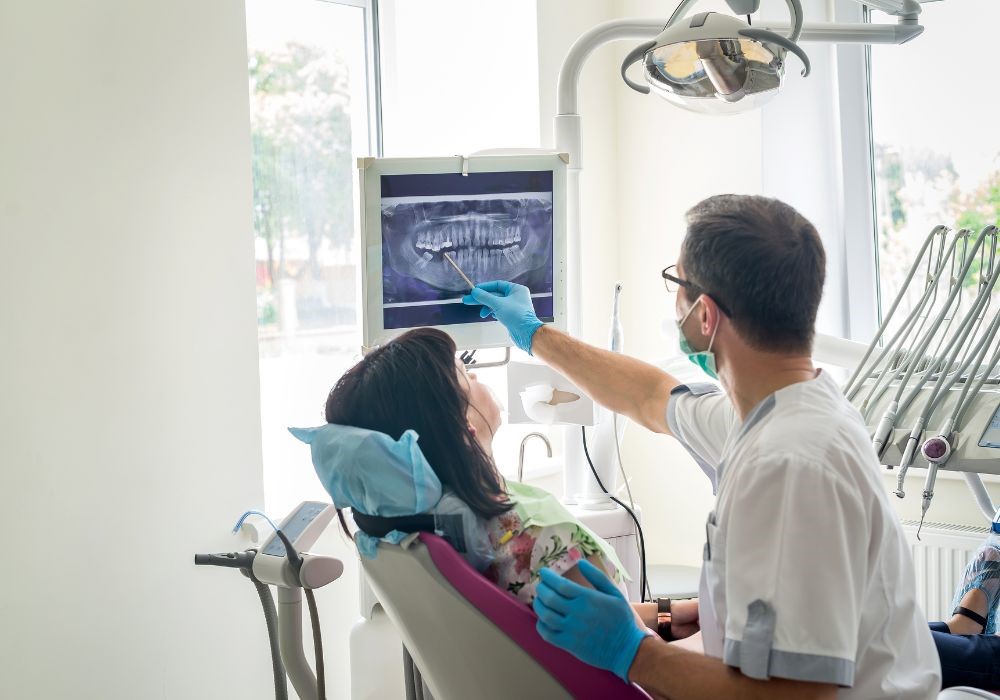
Dentistry has lots of new technology that they implement into their treatment plans. Learn more about these high-tech options for your smile.
One of the biggest advancements in dental technology is the digital X-ray. But have you ever wondered about other amazing advancements in dental technology? Do you want to know about the evolution of this field? Did you know that 3D printing can now be used to create full-sized teeth replacement models? Your dentist can create entire virtual mouths that they can view in detail. And it’s not just adults who benefit from this kind of technology: kids with braces can use the new technology to improve their experience and outcome.
1. Advanced Braces
People have multiple options to straighten their teeth without the metal of traditional braces; Invisalign uses virtual technology to create a model of your mouth. Clear plastic aligners are designed to shift your teeth into place over time. This advancement allows them to be removable and replaceable as needed during that time frame.
Traditional braces still exist, so there’s no need to worry if you want to go old school with this technology. Combined with regular dental hygiene care, braces can move crooked teeth into alignment naturally for a beautiful, healthy smile.
2. Laser Dentistry
Laser dentistry is a new type of dental treatment that uses lasers to remove plaque and whiten teeth. This amazing advancement in dental technology makes it easier for dentists to treat patients without causing pain or discomfort. Laser dentistry is more efficient than other methods. Coverage from insurance policies makes them affordable.
3. Virtual Reality
Virtual reality refers to a computer-generated environment with which people can explore and interact. VR is used in many industries, including healthcare, education, entertainment, and now your local dentist’s office.
Virtual reality is a training tool for dentists who want to learn about various procedures. It’s also an educational tool for patients interested in learning more about their dental care options. Dentistry has just begun to use virtual reality technology as it relates to dental procedures.
4. 3D Printing
3D printing is a process that creates a physical object from a digital model. This technology is being used in all sorts of industries, from medicine to construction.
3D printing has also found its way into the dental industry and has greatly impacted tooth repair. Dentists can create customized crowns that fit perfectly on each patient’s tooth using this technology. This model can be used to create many custom-made dental devices, such as a crown, a bridge, or even veneers.
Look Your Best
While many treatments and tools are available to help improve your smile, there is no one-size-fits-all solution. If you want to improve your smile or oral health, or if you’re looking for a new way to enhance your appearance, dental technology may be able to assist you. The best approach is to talk with your dentist about what they recommend, and what technology is available. And then make an informed decision based on their professional opinion.
Read Also
- Innovative Technologies in Oncology: The Future of Cancer Treatment
 Have you ever wondered how far cancer treatment has come in recent years? Advances in technology are making a real difference in the fight against cancer. Today, more people are living longer and healthier lives after a cancer diagnosis. This is all thanks to new and groundbreaking medical advancements. The future of cancer care looks… Read more: Innovative Technologies in Oncology: The Future of Cancer Treatment
 - Cloud-Based Healthcare Administration Solutions: A Guide for Payers, TPAs, and Provider NetworksHealthcare administration has become too complex for disconnected spreadsheets, aging on-premise applications, and manual handoffs between departments. Organizations need technology that can manage claims, enrollment, billing, provider relationships, and member data as connected parts of the same operation. MCSI – Visova is one example, offering a cloud-native vpaas designed to support HIPAA-compliant healthcare administration. Its… Read more: Cloud-Based Healthcare Administration Solutions: A Guide for Payers, TPAs, and Provider Networks
- How Intelligent Invoice Processing Is Reshaping Healthcare AP WorkflowsWhat happens when healthcare invoice volumes outpace the AP team’s ability to review, validate, and route them, while cost per invoice keeps rising? That gap is pushing finance leaders past basic digitization. Supplier invoices across formats, systems, departments, and approval paths, and holding speed, accuracy, compliance, and visibility together gets harder at scale. Intelligent invoice… Read more: How Intelligent Invoice Processing Is Reshaping Healthcare AP Workflows
- From 1905 to 2026: How German Legacy Manufacturers Power Deutsche Dental Technologien’s SuccessFrom 1905 to 2026: How Busch & Co.’s Legacy Powers Deutsche Dental Technologien’s Success In an era where dental technology advances at breakneck speed, few companies embody the perfect blend of historic craftsmanship and modern business agility quite like Busch & Co. and its strategic partner Deutsche Dental Technologien. What began as a small dental bur factory in… Read more: From 1905 to 2026: How German Legacy Manufacturers Power Deutsche Dental Technologien’s Success
- Why the Future of Healthcare Administration is Cloud-NativeThe operational demands placed on modern healthcare administrators have officially outpaced the capabilities of traditional IT infrastructure. While clinical medicine continues to advance at breakneck speed, the back-office systems required to support it often remain painfully stagnant. Today’s insurers, Third-Party Administrators (TPAs), and provider networks are forced to navigate an avalanche of daily claims, aggressive… Read more: Why the Future of Healthcare Administration is Cloud-Native